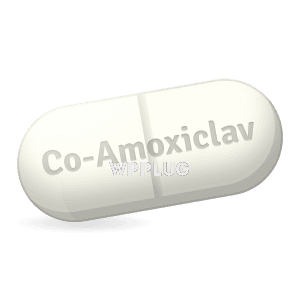
Co-Amoxiclav: Potent Dual-Action Antibiotic for Bacterial Infections
Co-amoxiclav is a broad-spectrum, combination antibiotic formulation consisting of amoxicillin and clavulanic acid. It is designed to treat a wide range of bacterial infections by leveraging the synergistic action of its two active components. Amoxicillin, a penicillin-derived antibiotic, inhibits bacterial cell wall synthesis, while clavulanic acid acts as a beta-lactamase inhibitor, protecting amoxicillin from enzymatic degradation by resistant bacteria. This combination enhances efficacy against beta-lactamase-producing pathogens, making it a versatile choice in both community and hospital settings. Its pharmacokinetic profile ensures reliable tissue penetration, supporting its use across multiple infection sites.
Features
- Contains amoxicillin trihydrate equivalent to 500 mg or 875 mg amoxicillin, and clavulanic acid as potassium clavulanate equivalent to 125 mg clavulanic acid per tablet
- Available in oral tablet, chewable tablet, and powder for oral suspension formulations
- Film-coated tablets for ease of swallowing and gastric tolerance
- Exhibits time-dependent bactericidal activity
- Stable at room temperature when stored appropriately
- Compatible with many concomitant medications under professional guidance
Benefits
- Effectively eradicates a broad spectrum of Gram-positive and Gram-negative bacteria, including beta-lactamase-producing strains
- Reduces the risk of antibiotic resistance development due to the clavulanic acid component
- Provides rapid onset of action, with symptomatic improvement often observed within 48–72 hours
- Suitable for use in both adult and pediatric populations (adjusting for weight and renal function)
- Supports high bioavailability and effective tissue penetration in respiratory, urinary, skin, and soft tissue infections
- Minimizes treatment failure in empirically managed infections where resistance is suspected
Common use
Co-amoxiclav is indicated for the treatment of bacterial infections caused by susceptible organisms. Common clinical applications include sinusitis, otitis media, community-acquired pneumonia, exacerbations of chronic bronchitis, urinary tract infections (including pyelonephritis), skin and soft tissue infections, dental abscesses, and bone/joint infections. It is also used in surgical prophylaxis for procedures involving the gastrointestinal tract, biliary system, and head/neck. Its spectrum covers Streptococcus pneumoniae, Haemophilus influenzae, Moraxella catarrhalis, Escherichia coli, Klebsiella species, and Staphylococcus aureus (non-MRSA).
Dosage and direction
Dosage varies based on infection severity, patient age, weight, and renal function. For mild to moderate infections in adults and children ≥40 kg: one 500 mg/125 mg tablet every 12 hours, or one 250 mg/125 mg tablet every 8 hours. For severe infections: one 875 mg/125 mg tablet every 12 hours. Pediatric dosing is weight-based: 25–45 mg/kg/day (amoxicillin component) divided every 12 hours, or 20–40 mg/kg/day divided every 8 hours. Maximum daily clavulanic acid should not exceed 125 mg every 8 hours or 250 mg every 12 hours in children. Tablets should be taken at the start of a meal to enhance absorption and reduce gastrointestinal upset. Complete the full prescribed course even if symptoms improve earlier.
Precautions
Use with caution in patients with hepatic impairment; monitor liver function periodically during prolonged therapy. In renal impairment (CrCl <30 mL/min), reduce dose or increase dosing interval. May cause false-positive urinary glucose tests with Benedict’s or Fehling’s solution; use glucose oxidase methods instead. Prolonged use may result in fungal or bacterial superinfection, including Clostridium difficile-associated diarrhea. Avoid in patients with a history of antibiotic-associated colitis. Use during pregnancy only if clearly needed (Category B). Excreted in breast milk; consider benefits versus risks. Not recommended in patients with mononucleosis due to increased rash risk.
Contraindications
Hypersensitivity to penicillins, cephalosporins, or other beta-lactam antibiotics. History of co-amoxiclav-associated cholestatic jaundice or hepatic dysfunction. Patients with phenylketonuria (some formulations contain aspartame). Contraindicated in individuals with a history of severe, immediate hypersensitivity reactions (e.g., anaphylaxis, Stevens-Johnson syndrome) to any component.
Possible side effect
Common: diarrhea, nausea, vomiting, abdominal discomfort, candidiasis (oral or vaginal). Less common: skin rash, urticaria, pruritus, headache, dizziness. Rare but serious: hepatitis, cholestatic jaundice, erythema multiforme, Stevens-Johnson syndrome, toxic epidermal necrolysis, agranulocytosis, thrombocytopenia, hemolytic anemia, interstitial nephritis, C. difficile-associated diarrhea, anaphylaxis. Discontinue immediately if signs of hypersensitivity or severe cutaneous reactions occur.
Drug interaction
Probenecid reduces renal excretion of amoxicillin, increasing its serum concentration. Concurrent use with allopurinol may increase incidence of skin rash. May reduce efficacy of oral contraceptives; advise alternative contraception during therapy. Antagonism may occur with bacteriostatic antibiotics (e.g., tetracyclines, macrolides). Co-administration with warfarin may enhance anticoagulant effect and increase INR; monitor closely. May alter intestinal flora, reducing estrogen reabsorption and potentially affecting oral contraceptive efficacy.
Missed dose
If a dose is missed, take it as soon as remembered unless it is almost time for the next dose. Do not double the dose to catch up. Resume the regular dosing schedule. Consistent dosing maintains effective antibiotic concentrations for optimal bacterial eradication.
Overdose
Symptoms may include gastrointestinal disturbances (nausea, vomiting, diarrhea), electrolyte imbalances, and crystaluria. Management is supportive; maintain hydration and electrolyte balance. Hemodialysis may enhance elimination of both components. There is no specific antidote.
Storage
Store at room temperature (15–30°C) in a dry place, protected from light and moisture. Keep oral suspension refrigerated after reconstitution; discard unused portion after 10 days. Keep out of reach of children and pets. Do not use beyond the expiration date.
Disclaimer
This information is for educational purposes and does not replace professional medical advice. Always consult a healthcare provider for diagnosis, treatment choices, and personalized dosing. Do not self-medicate. Report any adverse reactions to a physician or regulatory authority.
Reviews
“Co-amoxiclav has been a cornerstone in managing moderate to severe community-acquired respiratory infections in my practice. Its reliability against beta-lactamase producers reduces the need for broader-spectrum agents.” — Dr. Elena Rostova, Infectious Disease Specialist
“Effective and well-tolerated in pediatric patients with acute otitis media when dosed appropriately. The twice-daily regimen improves adherence.” — Dr. Mark Higgins, Pediatrician
“I’ve observed rapid clinical response in skin/soft tissue infections, though monitoring for GI side effects is advised.” — Clinical Pharmacist, University Hospital
“An essential agent in our empiric therapy protocols for UTIs in the elderly, with good renal adjustment guidelines.” — Dr. Susan Lee, Geriatric Medicine