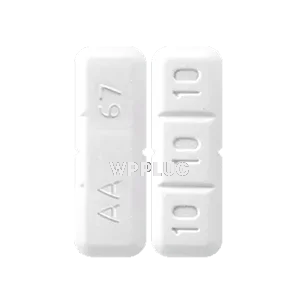
| Product dosage: 10mg | |||
|---|---|---|---|
| Package (num) | Per pill | Price | Buy |
| 90 | $0.45 | $40.10 (0%) | 🛒 Add to cart |
| 120 | $0.40 | $53.47 $48.13 (10%) | 🛒 Add to cart |
| 180 | $0.37 | $80.21 $66.17 (18%) | 🛒 Add to cart |
| 270 | $0.34 | $120.31 $91.24 (24%) | 🛒 Add to cart |
| 360 | $0.33
Best per pill | $160.42 $118.31 (26%) | 🛒 Add to cart |
| Product dosage: 5mg | |||
|---|---|---|---|
| Package (num) | Per pill | Price | Buy |
| 120 | $0.36 | $43.11 (0%) | 🛒 Add to cart |
| 180 | $0.33 | $64.67 $59.15 (9%) | 🛒 Add to cart |
| 270 | $0.30 | $97.00 $81.21 (16%) | 🛒 Add to cart |
| 360 | $0.29
Best per pill | $129.34 $104.27 (19%) | 🛒 Add to cart |
Synonyms
| |||
Buspar: Effective Anxiety Relief Without Sedation
Buspar (buspirone) is a non-benzodiazepine anxiolytic medication specifically developed for the management of anxiety disorders. Unlike traditional anti-anxiety agents, it operates through a unique mechanism of action as a partial agonist at serotonin 5-HT1A receptors, offering a distinct pharmacological profile. It provides clinically significant relief from anxiety symptoms without the pronounced sedative effects, muscle relaxation, or high abuse potential associated with benzodiazepines. This makes it a valuable therapeutic option for both acute and maintenance treatment in appropriate patient populations.
Features
- Active ingredient: Buspirone hydrochloride
- Pharmacologic class: Azapirone; anxiolytic
- Mechanism: Partial serotonin 5-HT1A receptor agonist
- Formulations: Oral tablets (5 mg, 7.5 mg, 10 mg, 15 mg, 30 mg)
- Non-scheduled medication (low abuse potential)
- No active metabolites
- Half-life: Approximately 2–3 hours
- Protein binding: 86%–95%
Benefits
- Provides effective relief from generalized anxiety symptoms without significant sedation
- Lacks the dependency and withdrawal profile associated with benzodiazepines
- Does not impair cognitive function or psychomotor performance to the same degree as sedative-hypnotics
- Minimal euphoric effects, reducing potential for misuse
- Suitable for long-term management of anxiety disorders
- Can be used in patients with a history of substance use disorders where benzodiazepines are contraindicated
Common use
Buspar is primarily indicated for the management of anxiety disorders, particularly generalized anxiety disorder (GAD). It is used to alleviate symptoms such as excessive worry, tension, irritability, and apprehension. It may also be used off-label as an augmenting agent in major depressive disorder and to mitigate SSRI-induced sexual dysfunction. Unlike benzodiazepines, it is not indicated for panic disorder, insomnia, or as a muscle relaxant.
Dosage and direction
The initial recommended dose is 7.5 mg administered twice daily. Dosage may be increased in increments of 5 mg per day every 2–3 days, as tolerated. The effective therapeutic dose typically ranges from 20 mg to 60 mg per day, divided into two or three doses. Maximum daily dose should not exceed 60 mg. Administration with food may improve bioavailability and reduce dizziness. Consistent timing of doses is recommended to maintain stable plasma concentrations.
Precautions
Patients should be advised that full anxiolytic effects may take up to 3–4 weeks to manifest. Caution is advised when operating machinery or driving until the individual response is established. Use with caution in patients with hepatic or renal impairment, with appropriate dose adjustments. Abrupt discontinuation is generally well-tolerated, but gradual tapering is recommended after long-term use. Not recommended for use during pregnancy unless clearly needed.
Contraindications
Hypersensitivity to buspirone or any component of the formulation. Concurrent use with monoamine oxidase inhibitors (MAOIs) due to risk of hypertensive crisis. Severe hepatic impairment. Should not be used for management of benzodiazepine withdrawal.
Possible side effect
Common side effects (≥1%) include dizziness, nausea, headache, nervousness, lightheadedness, and excitement. Less frequently reported effects include drowsiness, insomnia, fatigue, blurred vision, and gastrointestinal disturbances. Rare but serious adverse effects may include serotonin syndrome, extrapyramidal symptoms, and allergic reactions. Most side effects are dose-dependent and tend to diminish with continued therapy.
Drug interaction
MAOIs: Risk of hypertensive crisis.
Strong CYP3A4 inhibitors (e.g., ketoconazole, ritonavir): May significantly increase buspirone levels.
CYP3A4 inducers (e.g., rifampin, carbamazepine): May decrease buspirone efficacy.
Diazepam: May increase serum concentrations of diazepam.
Haloperidol: Increased serum haloperidol concentrations.
Alcohol: May enhance cognitive and motor impairment.
Missed dose
If a dose is missed, it should be taken as soon as remembered unless it is nearly time for the next scheduled dose. In that case, the missed dose should be skipped and the regular dosing schedule resumed. Doubling of doses is not recommended.
Overdose
Symptoms may include severe dizziness, drowsiness, nausea, vomiting, and gastric distress. There is no specific antidote. Management involves supportive care, including gastric lavage if presented early, and symptomatic treatment. Hemodialysis is not likely to be effective due to high protein binding.
Storage
Store at controlled room temperature (20°–25°C or 68°–77°F). Protect from light and moisture. Keep in original container tightly closed. Keep out of reach of children and pets.
Disclaimer
This information is for educational purposes only and does not constitute medical advice. Always consult a qualified healthcare provider for diagnosis and treatment decisions. Do not initiate, discontinue, or change dosage without professional medical supervision.
Reviews
Clinical studies and post-marketing surveillance indicate that Buspar is generally well-tolerated and effective for anxiety management, particularly in patients who cannot tolerate or wish to avoid benzodiazepines. Patient satisfaction often relates to the absence of significant sedation and the preservation of cognitive function. Some patients report slower onset of action compared to benzodiazepines. Adherence to prescribed dosing is critical for optimal therapeutic outcomes.