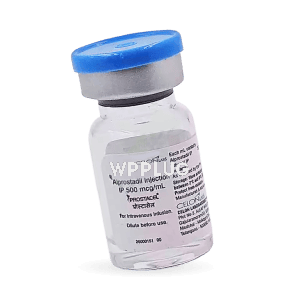
| Product dosage: 500mcg | |||
|---|---|---|---|
| Package (num) | Per injection | Price | Buy |
| 1 | $301.67
Best per injection | $301.67 (0%) | 🛒 Add to cart |
Alprostadil: Restoring Erectile Function Medically
Alprostadil is a prostaglandin E1 analog used primarily in the management of erectile dysfunction (ED) and for maintaining patency of the ductus arteriosus in neonates with congenital heart defects. As a vasodilatory agent, it works by relaxing smooth muscle tissue and dilating blood vessels, facilitating increased blood flow to specific anatomical regions. Its clinical formulations include intracavernosal injections, intraurethral suppositories, and topical creams, offering tailored approaches based on patient needs and physiological responses. This agent represents a cornerstone in both urological and cardiological therapeutic protocols, supported by extensive clinical evidence.
Features
- Synthetic prostaglandin E1 analog with potent vasodilatory properties
- Available in multiple formulations: intracavernosal injection, intraurethral pellet, topical cream
- Rapid onset of action, typically within 5–15 minutes for erectile applications
- Short half-life (approximately 5–10 minutes in circulation), allowing precise therapeutic control
- Does not depend on neuronal nitric oxide pathways, making it effective in various ED etiologies
- Sterile, pyrogen-free formulations meeting pharmacopeial standards
Benefits
- Effectively induces erection sufficient for sexual intercourse in patients with organic, psychogenic, or mixed ED
- Provides a non-oral alternative for patients contraindicated for or unresponsive to PDE5 inhibitors
- Allows titration to individualized effective dose, minimizing side effects while maximizing efficacy
- Useful in diagnostic testing for vascular causes of erectile dysfunction
- Can be used in patients taking nitrates, unlike oral PDE5 inhibitors
- Offers flexibility with on-demand use, supporting spontaneous sexual activity
Common use
Alprostadil is most frequently prescribed for the treatment of erectile dysfunction, particularly in cases where oral phosphodiesterase type 5 (PDE5) inhibitors are ineffective, contraindicated, or not preferred by the patient. It is also employed as a second-line therapy when psychological or neurological factors contribute to ED. In neonatal cardiology, it is used to maintain temporary patency of the ductus arteriosus in infants with ductal-dependent congenital heart defects until surgical correction can be performed. Off-label uses include the treatment of peripheral vascular disease and Raynaud’s phenomenon, though evidence is more limited in these applications.
Dosage and direction
For intracavernosal injection in erectile dysfunction: Initiate with 2.5 mcg; if inadequate response, titrate upward in 2.5–5 mcg increments to a maximum of 60 mcg per injection. Dosing frequency should not exceed once daily or three times weekly. For intraurethral administration: Initial dose is 125–250 mcg; may increase to 500 mcg or decrease to 125 mcg based on response. Apply topical formulation as a thin layer to the glans penis and urethral meatus 5–30 minutes before intercourse. In neonatal use: Continuous IV infusion starting at 0.05–0.1 mcg/kg/min, titrated to maintain ductal patency. Always use aseptic technique for injections and follow reconstitution instructions precisely.
Precautions
Patients should receive proper training in injection technique or urethral application to minimize risks of injury or incorrect dosing. Use caution in patients with anatomical penile deformities (e.g., Peyronie’s disease), as increased risk of corporal fibrosis or plaque formation may occur. Monitor for priapism; erections lasting more than 4 hours require immediate medical attention to prevent permanent tissue damage. Cardiovascular status should be evaluated before initiation, as vasodilation may cause hypotension. Avoid use in conditions predisposing to bleeding or in patients on anticoagulant therapy due to increased bleeding risk at injection sites.
Contraindications
Known hypersensitivity to alprostadil or any component of the formulation. Men with conditions that predispose to priapism (e.g., sickle cell anemia, multiple myeloma, leukemia). Patients with anatomical deformities of the penis that may make injection or intraurethral use hazardous. Use is contraindicated in neonates with respiratory distress syndrome due to risk of apnea. Not recommended in patients with penile implants or those with a history of venous thrombosis or severe cavernosal fibrosis.
Possible side effect
- Penile pain (up to 37% of patients with injection, 32% with intraurethral)
- Prolonged erection or priapism (incidence <1–4%)
- Local hematoma, bruising, or bleeding at injection site
- Urethral burning or minor bleeding (intraurethral formulation)
- Dizziness or hypotension due to systemic vasodilation
- Fibrosis or plaques at injection sites with chronic use
- Headache, upper respiratory tract infection (less common)
Drug interaction
Concomitant use with other vasodilators (e.g., antihypertensives, nitrates) may potentiate hypotensive effects. Anticoagulants (warfarin, heparin, DOACs) may increase risk of bleeding or hematoma formation at injection sites. Drugs affecting platelet aggregation (e.g., NSAIDs, SSRIs) could theoretically increase bleeding risk, though clinical significance is uncertain. No known interactions with hepatic enzyme inducers or inhibitors due to alprostadil’s rapid metabolism.
Missed dose
Alprostadil is used on an as-needed basis for erectile dysfunction; there is no scheduled dosing regimen. If a dose is missed or not administered at the planned time, it may be taken when remembered, provided that sexual activity is anticipated. Do not double the dose to make up for a missed administration. In neonatal continuous infusion settings, any interruption should be addressed immediately per clinical protocol to maintain ductal patency.
Overdose
Symptoms may include severe hypotension, syncope, prolonged painful erection (priapism), or palpitations. In case of intracavernosal overdose leading to priapism, aspiration of corporal blood or irrigation with sympathomimetic agents (e.g., phenylephrine) may be necessary. Systemic overdose in neonates can cause apnea, fever, or hypotension; supportive care and dose adjustment are indicated. Seek emergency medical assistance for erections lasting more than 4 hours.
Storage
Store unopened vials or pellets at controlled room temperature (20–25°C). Protect from light. Do not freeze. Once reconstituted, use injection solutions immediately or within 24 hours if refrigerated; discard any unused portion. Topical creams should be kept in their original container with the cap tightly closed. Keep all formulations out of reach of children and pets.
Disclaimer
This information is intended for educational purposes and does not replace professional medical advice, diagnosis, or treatment. Always consult a qualified healthcare provider before starting, changing, or stopping any medication. Individual responses to alprostadil may vary based on health status, concomitant medications, and adherence to administration guidelines. The manufacturer’s prescribing information should be reviewed for complete details.
Reviews
Clinical studies and patient reports indicate high efficacy rates, with up to 80% of men achieving erections sufficient for intercourse. Satisfaction varies based on formulation; injections often show higher efficacy but greater discomfort, while intraurethral and topical options provide non-invasive alternatives with slightly lower success rates. Long-term users note the importance of proper technique to minimize side effects. Neonatal use is well-supported in critical care settings, with efficacy in maintaining ductal patency demonstrated in numerous trials.